A prospective client asks for a capability statement. You have a website, a collection of project photos and a presentation from last year. Which parts belong in the document, and how do you make them work together?
A useful capability statement gives someone enough information to understand your business, assess relevant experience and start a conversation. Before deciding on colours or page count, decide who will read it and what they need to know.
A capability statement is a concise introduction to your organisation’s services, experience and capacity to deliver. It brings together the evidence a potential client or project partner needs when deciding whether your business is relevant to an opportunity.
For an engineering practice, that might mean project types, technical disciplines and the people involved. For a consultancy, it could mean specialist expertise, the sectors you understand and examples of your work. The content should reflect the conversation you want to have.
Write down the document’s main job in one sentence. For example: “Introduce our engineering practice to architects working on commercial projects.” That gives you a useful test for every page.
A general introduction can work across several enquiries. A version for a specific sector should put its most relevant experience first. If a buyer supplies questions, a template or a page limit, use those instructions to shape the document. A general capability statement will not necessarily answer a particular tender’s requirements.
Gather the content before committing to a layout. A practical starting point is:
Check permission before including client names, testimonials, photographs or project details. If some work is confidential, discuss what can be shown before design begins.
A reader should be able to scan the headings and understand your offer. Give services, project summaries and contact details clear places in the layout. Keep related information together and leave enough space for comfortable reading.
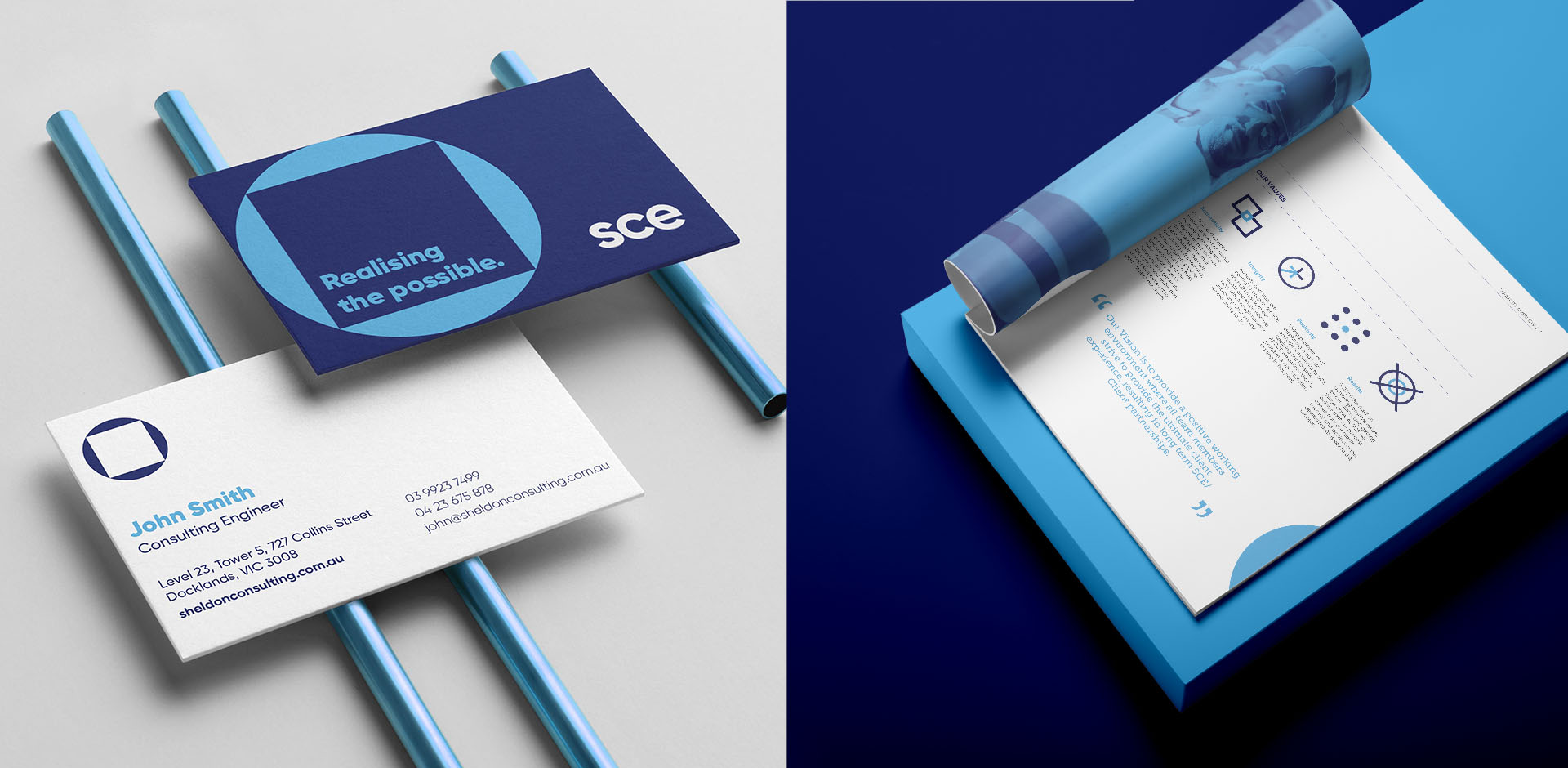
Use the same core identity as your other communications: logo, typography, colour and image style. In our work for Sheldon Consulting Engineers, the brand identity extended across style guides, stationery, marketing material and a website. That consistency is a useful principle when planning a new business document.
Choose imagery that helps explain the work. A well-captioned project photograph or simple diagram can provide more context than a decorative stock image. Where a chart is useful, label it clearly and identify the source of its figures.
Let the purpose determine the length. A short introduction may need only a few pages. A document covering several service areas or detailed project examples may need more.
Start with the essential information and add pages only when they help the reader make a decision. Avoid shrinking text to fit everything into an arbitrary page count. You can keep a longer set of approved project summaries and select the relevant ones for each version.
Tell your designer how you will distribute the document. A PDF sent by email, a download from your website and a printed booklet have different production considerations. Agree on the formats you need, check links in the digital version and proof a printed sample where print is part of the scope.
Also discuss who will make future changes and which software they can use. Confirm whether editable files or a template are included in the agreed scope. Keep an approved master copy and assign someone to review project details, staff information and credentials before each release.
Bring your audience and purpose, draft copy, current brand files, approved project examples and available photography. Add any buyer requirements, required formats, deadline and the name of the person coordinating feedback. Flag missing content early so it can be allowed for in the brief.
Planning a capability statement or a wider set of business materials? Explore our graphic design services in Melbourne and Ballarat, or talk to Seamer Design about what your document needs to do.