What if your shopfront is actually turning customers away before they even reach the door? Your signage is your brand's physical handshake. It's the first touchpoint for every passerby. If your exterior signage design is fading under the harsh Australian sun or looks cluttered, you're losing authority and foot traffic every single day.
We know the frustration of seeing a beautiful brand identity lose its impact because of poor material choices or confusing council regulations. It's disheartening to invest in a vision only to see it peel or go unnoticed from the street. You want a presence that feels both visionary and grounded. This guide helps you design signage that captures attention and communicates your professional authority. We'll explore how to balance technical legibility with strategic brand identity. You'll discover the secrets to selecting durable materials for the Aussie climate and navigating the permit process to ensure your brand stands tall for years to come.
• Transform your shopfront into a strategic asset. Bridge the gap between your digital brand and your physical location.
• Master the 3-second rule and visual hierarchy. Capture attention from drivers and pedestrians instantly.
• Select premium materials for your exterior signage design. Protect your brand from the harsh Australian sun and coastal elements.
• Navigate council permits and site analysis. Ensure your signage is visible, compliant, and positioned for maximum impact.
• Align your environmental graphics with your broader brand strategy. Create a high-end, cohesive experience that elevates your authority.
Your building is a silent ambassador. It works 24/7. Exterior signage design is the deliberate process of crafting physical brand touchpoints that command attention. It serves as the vital bridge between your digital presence and your physical location. It's where your online promise meets the physical reality. Strategic signage does more than just show the way. It communicates authority. It builds trust. It broadcasts your unique value proposition before a word is even spoken.
Many businesses treat a sign as a utility. They view it as a simple "logo on a board." This is a missed opportunity. A logo on a board is an afterthought; a strategic sign is an experience. Throughout the history and purpose of signage, the most impactful brands have used physical markers to establish dominance and clear identity in a crowded market. You aren't just buying a sign. You are investing in brand equity that lives in the physical world. It is a long-term asset that pays dividends in foot traffic and brand recall.
The entrance to your business is a psychological threshold. As customers approach, they are subconsciously evaluating your professionalism. A well-designed entrance influences the perceived value of your services. It suggests quality. It implies attention to detail. Functional identification tells people where you are; brand storytelling tells them who you are. High-end signage elevates your brand from a commodity to a destination. It creates a sense of place that resonates with your audience on an emotional level. It makes your brand feel grounded and permanent.
Consistency is the foundation of brand trust. Your brand colours must remain true whether they are glowing on a screen or fabricated in powder-coated steel. This requires technical precision. It involves understanding how different lighting conditions affect pigments and textures. Translating digital typography into physical forms is equally critical. Legibility at a distance requires specific adjustments to kerning and weight that differ from print or web design. Partnering with a visual identity design agency ensures this transition is seamless. It guarantees that your physical presence is a perfect reflection of your strategic vision. Every element must be intentional. Every detail must align to create a cohesive brand story.
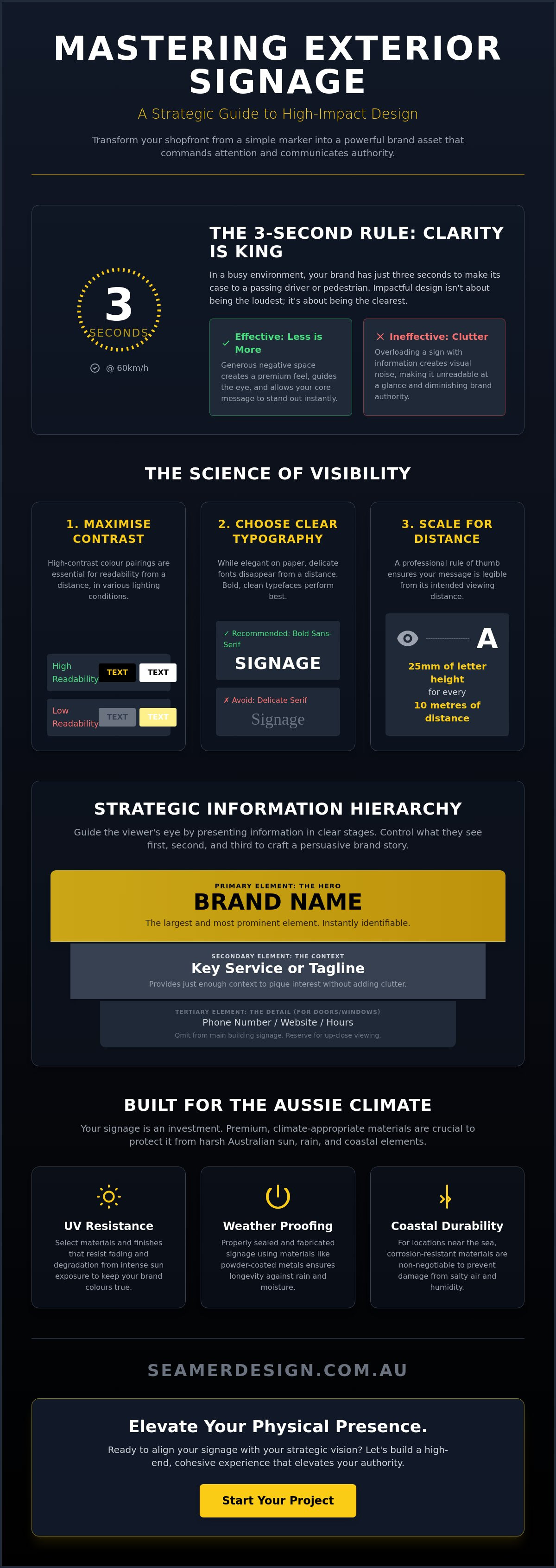
Design is a dialogue. It's an invitation. In a busy urban environment, your brand has exactly three seconds to make its case. If a driver is travelling at 60km/h, they need to identify your business instantly. Impactful exterior signage design isn't about shouting the loudest; it's about being the clearest. You must strip away the noise to let your core message shine. This requires a ruthless commitment to the "less is more" philosophy. Clutter is the enemy of conversion. When you remove unnecessary elements, you allow your brand authority to take centre stage.
Sophistication lives in the gaps. Using negative space is a deliberate strategic choice, not a lack of content. It creates a sense of calm and premium quality that busy, cramped signs can't replicate. This breathing room guides the eye. It establishes a clear visual hierarchy. You decide what the customer sees first, second, and third. By controlling this flow, you transform a simple building marker into a persuasive brand experience. If you're looking to refine your physical presence, our team can help you develop a brand strategy that translates beautifully to the street.
Science dictates visibility. High-contrast colour pairings, such as black on white or yellow on dark navy, offer the best readability from a distance. Font selection is equally vital. While a delicate serif might look elegant on a business card, it often disappears when viewed from thirty metres away. Bold, clean sans-serif typefaces typically perform better for exterior applications. A standard rule of thumb is to allow 25mm of letter height for every 10 metres of viewing distance. We also look to international best practices, including ADA accessibility standards for signs, to ensure our designs are inclusive and highly legible for all users.
Information must be delivered in stages. Your primary branding is the hero. It should be the largest and most prominent element. Secondary service messaging comes next, providing just enough context to pique interest. Don't feel pressured to include phone numbers or email addresses on main building signs. Most people won't stop to write them down; they'll simply search for your name on their phone. Instead, focus on creating a memorable visual impact. Use wayfinding signage design to provide directional cues that lead customers from the footpath to your door. This logical flow reduces friction and creates a seamless transition from the street to your interior space.
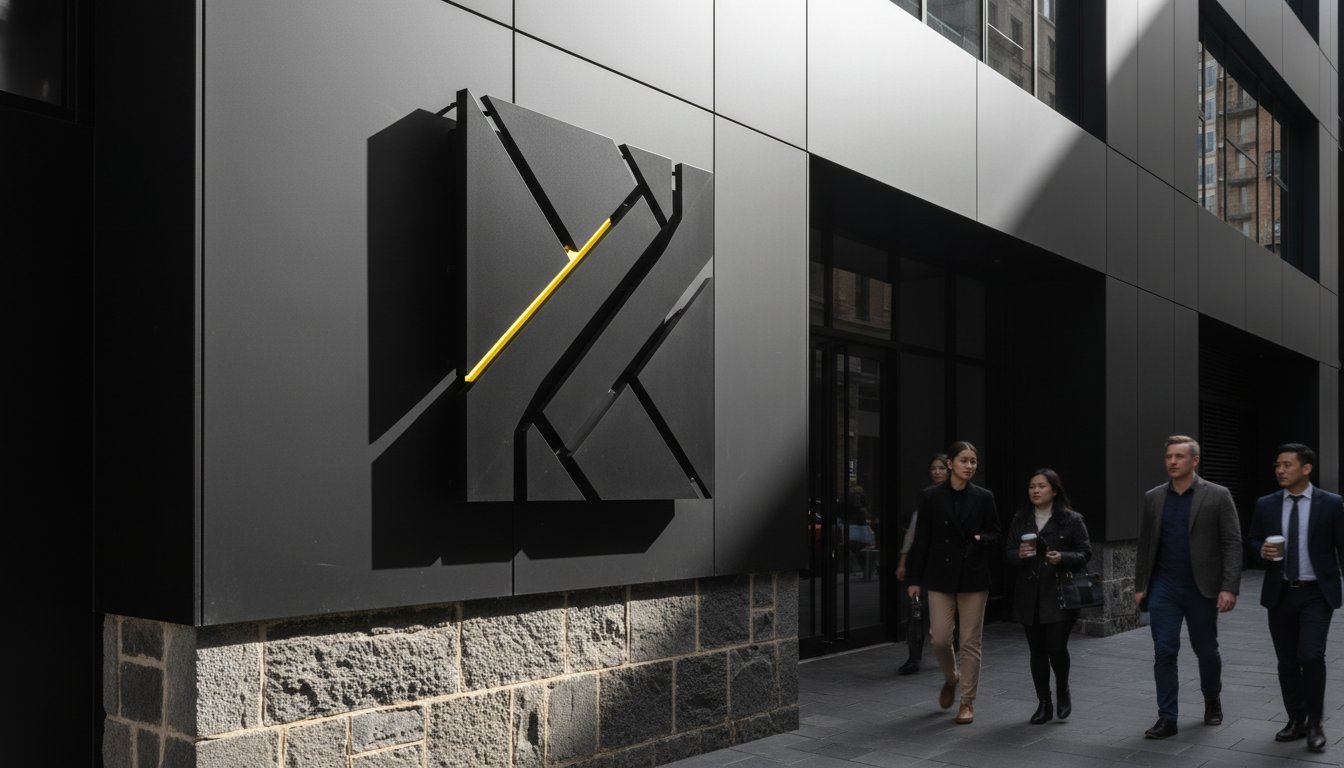
Materiality is the physical voice of your brand. It's where exterior signage design transforms from a digital concept into a tactile reality. Your choice of substrate defines your brand character before a single word is read. Polished brass signals heritage and luxury. Reclaimed timber suggests an organic, grounded approach. These aren't just aesthetic choices; they are strategic signals of value. Selecting the right material ensures your physical presence aligns perfectly with your brand's soul.
The Australian sun is relentless. Intense UV rays can bleach a poorly chosen sign in months, turning a vibrant brand into a faded memory. Coastal locations face the added challenge of salt spray and corrosion. Durability is a non-negotiable requirement for any impactful brand. We focus on textures and finishes that manage these environmental pressures. Matte finishes are often superior for readability because they reduce blinding sun glare. For modern brands, sustainability is also a key driver. Eco-friendly composites and recycled metals offer a way to project authority while respecting the planet.
Powder-coated aluminium stands as the gold standard for regional centres like Ballarat and the variable weather of Melbourne. It is lightweight, rust-resistant, and holds colour with exceptional tenacity. 3D acrylic lettering provides sophisticated depth, though it must be high-grade to prevent becoming brittle in the heat. Hand-painted murals offer a bespoke, local champion feel, but they require more frequent maintenance to stay sharp. A regular cleaning schedule is the simplest way to protect your investment. It prevents grime buildup and ensures your shopfront looks brand new for years to come.
Your brand shouldn't disappear at sunset. Effective illumination extends your reach into the evening hours. Backlit "halo" effects create an understated, sophisticated glow that feels high-end and inviting. In contrast, front-lit light boxes offer maximum commercial impact and visibility from a distance. We utilise LED technology for its energy efficiency and superior colour accuracy. This ensures your brand colours remain true under the night sky. Always consider the ambient street lighting. You don't want your sign to be washed out by a nearby streetlight or to create unwanted light pollution in a quiet neighbourhood.
Execution is where vision meets reality. You can have the most sophisticated exterior signage design in the world, but it fails if it's hidden behind a power pole or rejected by the local council. Site analysis is the most critical step in the "how-to" process. It's the groundwork that ensures your investment actually works for your business. We don't just look at the building; we look at the environment. We evaluate sightlines from every possible approach. How does a pedestrian see it from across the street? What does a driver see when they are turning the corner? This strategic placement ensures your brand is seen at the right moment.
Architectural integration is about respect. Your signage should feel like a natural extension of the building facade, not a distracting afterthought. We consider the textures, lines, and history of the structure. Budgeting for this stage requires a clear-eyed view of installation logistics. There are often hidden costs that catch businesses off guard. If your sign is at height, you may need scaffolding or specialised lifting equipment. In busy urban areas, traffic management permits are often a requirement, and consulting with ML Traffic Engineers Australia can help ensure all regulatory requirements are met. These aren't just technical details. They are essential components of a successful brand rollout.
Navigating the Victorian Planning Provisions is a complex task for any business owner. You must determine whether you need a planning permit, a building permit, or both. These requirements vary significantly between metropolitan Melbourne and regional centres. In historic Ballarat, heritage considerations are paramount. You can't simply install a modern light box on a 19th-century gold-rush era shopfront without a strategic plan. We help you navigate these hurdles to ensure your brand stands tall while respecting local character and law.
We measure the "cone of vision" for your specific location to find the sweet spot for visibility. This involves identifying potential obstructions like street trees, power poles, or even larger neighbouring signs. Scaling is often the biggest challenge. What looks large on a computer screen can disappear on a massive brick wall. We use 3D mockups to visualise the scale and impact before committing to production. This precision eliminates guesswork and ensures your message is delivered with maximum clarity. If you're ready to transform your physical presence, our team provides the environmental graphics and signage expertise to manage the process from concept to completion.
Collaboration is the engine of transformation. We don't simply execute a brief; we champion your goals. Our approach to exterior signage design is rooted in intentionality. We bridge the gap between your current state and a visionary future. Every project begins with a deep discovery phase. We uncover the specific site constraints and brand aspirations that define your unique position. This ensures the final result is both visionary and grounded. We act as your strategic partner throughout the entire creative journey.
Strategy leads every creative decision. We align your concepts with your broader visual identity to ensure a seamless transition from digital to physical. Technical documentation is where our precision shines. We prepare the exact files required for both high-end fabrication and complex council approvals. This methodical flow respects your time. It eliminates the friction often found in large-scale branding projects. We oversee the entire project management cycle. We move your brand from the screen to the street with absolute confidence. Our team manages the logistics so you can focus on growth.
We protect the integrity of your brand. Achieving colour truth in physical materials requires a sophisticated understanding of light and chemistry. We collaborate with premium fabricators who share our obsession with architectural finishes. A design-led approach is fundamentally different from a manufacturer-led one. While a manufacturer focuses on what is easiest to build, we focus on what best serves your brand strategy. We push the boundaries of materials and forms to create something truly bespoke. This elevation of your brand is the direct result of our collaborative process.
Your brand story doesn't end at the front door. We create a consistent journey that leads your customers from the kerbside to the counter. This involves integrating your exterior markers with interior office branding and environmental graphics. It creates a sense of shared purpose and professional authority. This holistic perspective is what separates a simple shopfront from a true brand destination. It builds trust through every touchpoint. We bridge the gap between your physical space and your digital promise. Ready to elevate your presence? Enquire with Seamer Design today.
Your shopfront is more than a location; it's a strategic opportunity to command attention. By mastering the balance between visual hierarchy and durable materiality, you transform a simple building into a high-end brand destination. Successful exterior signage design requires a blend of creative vision and technical precision. It's about ensuring your message remains legible at a distance while withstanding the relentless Australian sun. Every detail, from the choice of substrate to the halo of an LED, should work to bridge the gap between your brand's digital promise and its physical reality.
At Seamer Design, we bring 20+ years of strategic design experience in Melbourne and Ballarat to every project. We understand the nuances of the local landscape and the importance of architectural integration. Our collaborative approach ensures your brand strategy is perfectly reflected in your physical environment. We take the stress out of the logistics by navigating complex local council permit requirements on your behalf. Elevate your brand presence with custom exterior signage design. Your brand deserves to stand out with authority and purpose. Let's create a landmark that reflects your true value.
Professional design fees are influenced by the scale of your project and the level of strategic input required. These costs typically cover the discovery phase, conceptual design, and the preparation of technical files for fabricators. It is important to distinguish between the design investment and the physical production costs, which are handled by specialist signage manufacturers.
Most commercial signs in Melbourne and regional Victoria require a planning permit from the local council. Requirements depend on the sign's size, its location on the building facade, and whether it features illumination. Heritage overlays in areas like Ballarat add extra layers of regulation that must be addressed early in the design phase.
Powder-coated aluminium is the most reliable material for the harsh Australian climate. It offers exceptional resistance to UV fading and coastal salt corrosion. For 3D elements, high-quality acrylic with UV-stabilisers ensures your brand colours remain vibrant and the material does not become brittle over time.
Optimal size is determined by the speed of approaching traffic and the specific viewing distance. Signs intended for drivers at 60km/h need much larger typography than those aimed at pedestrians on a narrow footpath. We measure these distances carefully to ensure your exterior signage design is perfectly scaled for its environment.
Exterior signage is primarily about brand identification and making a bold visual impact from the street. Wayfinding is a functional system designed to help people navigate from the kerb to their final destination. While both use environmental graphics, wayfinding focuses on the user journey and reducing navigation friction within a space.
We act as your strategic partner from the initial concept through to the preparation of council documents. Our team creates the precise technical drawings and site plans needed to satisfy local planning requirements. This ensures your exterior signage design is not only visionary but also fully compliant with Victorian Planning Provisions.
The timeline depends on the complexity of the project and the speed of council approvals. While the creative design phase might take a few weeks, the permit process can add several months to the schedule. We provide a structured project management flow to keep your brand rollout moving forward with intentionality.
Impact often comes from simplicity. For high-speed roads, a full logo with clear typography is usually the best choice for instant recognition. In a premium retail setting, using just your brand mark can communicate a sense of sophisticated authority and modern minimalism that resonates with your audience.